Tech Sparks: Fueling Creativity and Innovation
In today's world, technology plays a massive role in sparking creativity and innovation. From digital tools that artists use to express their ideas to collaborative platforms that allow teams to brainstorm and share, the impact of technology is everywhere. This article explores how various technological advancements are reshaping the creative landscape, making it easier for individuals and groups to innovate and express themselves in new ways.
Key Takeaways
- Digital tools empower artists to explore new forms of creative expression.
- Collaboration through technology leads to innovative solutions and fresh ideas.
- AI is changing how we create, but it also raises important ethical questions.
- Young people benefit from tech-driven learning that fosters creativity.
- Traditional art forms are being enhanced through digital methods and new technologies.
Harnessing Digital Tools for Creative Expression
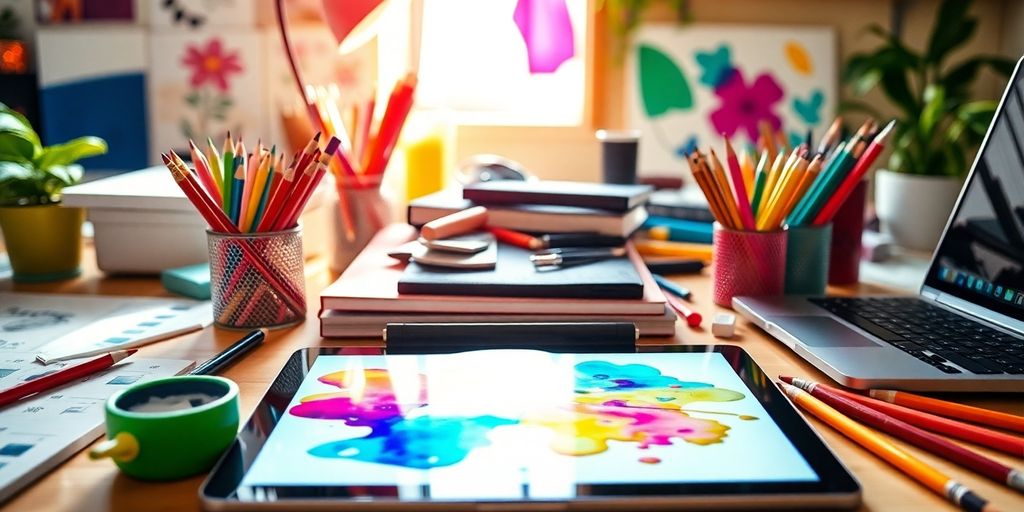
Digital tools have really changed the game for how we express ourselves creatively. It's not just about replacing traditional methods, but about opening up entirely new possibilities. I remember when I first started messing around with digital art software – it felt like I had superpowers! Now, anyone can explore their artistic side with just a computer or tablet.
Exploring Creative Software
Creative software is everywhere, and it's getting more accessible all the time. From free apps on your phone to professional-grade programs, there's something for everyone. The key is to find the tools that fit your style and needs.
Here are some things to consider:
- Ease of use: Is the software intuitive, or will you spend hours watching tutorials?
- Features: Does it have the tools you need for your specific projects?
- Cost: Are you willing to pay a subscription fee, or do you prefer a one-time purchase?
The Impact of Social Media on Art
Social media has become a huge platform for artists to share their work and connect with audiences. Instagram, TikTok, and other platforms have made it easier than ever to get your art seen by the world. But it's not just about exposure; social media also influences the creative process itself.
Social media provides instant feedback, which can be both a blessing and a curse. It's great to get encouragement and build a following, but it's also easy to get caught up in chasing likes and trends. It's important to stay true to your own vision and not let social media dictate your art.
Virtual Reality as a Canvas
VR is pushing the boundaries of what's possible in art and design. Imagine being able to step inside your artwork and experience it from every angle. That's the power of VR. It's not just for gaming anymore; it's becoming a powerful tool for innovation through digital tools.
VR offers unique opportunities:
- Sculpting in 3D space
- Creating immersive installations
- Collaborating with other artists in virtual environments
It's still early days for VR art, but the potential is huge. I'm excited to see how artists will continue to push the limits of this technology and come up with new and exciting creative solutions using technology.
Fostering Innovation Through Collaboration
Innovation doesn't happen in a vacuum. It's a team sport, and collaboration is the name of the game. When people come together, share ideas, and build on each other's strengths, that's when the magic really happens. It's about creating an environment where everyone feels comfortable contributing, challenging assumptions, and pushing the boundaries of what's possible. Think about it – some of the most groundbreaking inventions and discoveries in history have been the result of collaborative efforts.
Cross-Disciplinary Teams
Putting people with different backgrounds and skill sets together can lead to some seriously cool results. You get perspectives you wouldn't normally have, and that can spark new ideas and approaches. It's like mixing different colors on a palette – you might end up with something totally unexpected and beautiful. For example:
- Engineers working with artists.
- Marketers collaborating with scientists.
- Designers partnering with historians.
The Role of Remote Work Technologies
Remote work is here to stay, and that means we need to be smart about how we use technology to stay connected and collaborate effectively. It's not just about video calls – it's about using tools that allow us to share ideas, brainstorm together, and build on each other's work, no matter where we are in the world. Think about:
- Shared document platforms.
- Virtual whiteboards.
- Project management software.
Building a Culture of Open Communication
Open communication is key to successful collaboration. People need to feel like they can share their ideas, ask questions, and give feedback without fear of judgment. It's about creating a safe space where everyone feels valued and respected. This can be achieved by:
- Encouraging active listening.
- Providing regular opportunities for feedback.
- Promoting transparency in decision-making.
When teams communicate openly, they're more likely to identify problems early, find creative solutions, and ultimately, achieve better results. It's about building trust and creating a shared understanding of goals and objectives.
The Influence of Artificial Intelligence on Creativity
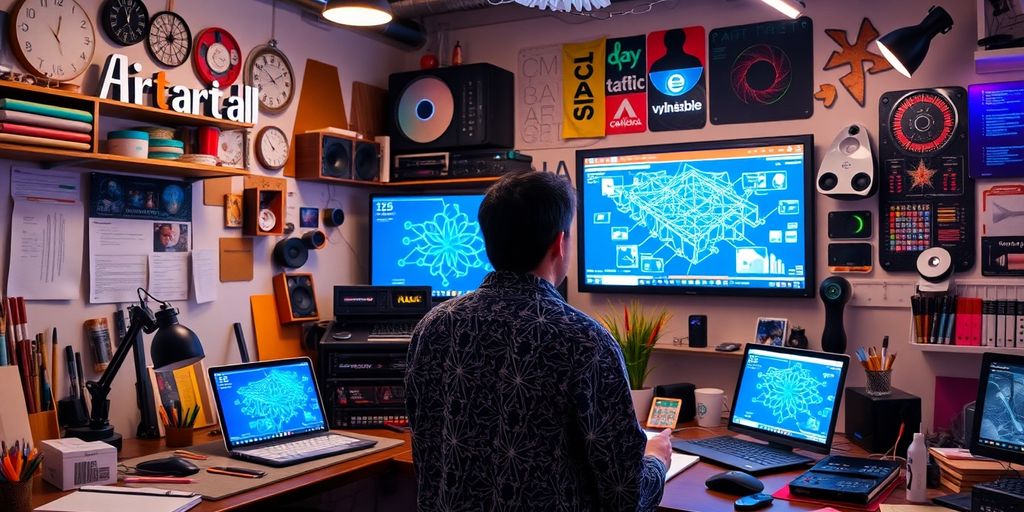
AI is changing how we make stuff. It's not just about robots taking over; it's about new tools that help artists and creators do things they couldn't before. But it also brings up some big questions.
AI-Driven Design Tools
AI design tools are becoming more common. They can help with everything from generating initial ideas to refining final products. These tools use algorithms to analyze data and create designs based on specific parameters. It's like having a super-powered assistant that can explore countless options in a fraction of the time it would take a human. I've been playing around with some of these, and it's wild how quickly you can iterate on concepts. It's not about replacing designers, but augmenting their abilities.
Machine Learning in Content Creation
Machine learning is also making waves in content creation. Think about AI that can write articles, compose music, or even create videos. It's not always perfect, but it's getting better all the time. Here are some ways machine learning is being used:
- Generating text prompts for writers.
- Composing melodies and harmonies for musicians.
- Creating abstract patterns for visual artists.
The big question is: how do we make sure these tools are used responsibly? It's easy to get caught up in the hype, but we need to think about the long-term impact on creativity and the role of human artists.
Ethical Considerations in AI Art
This is where things get tricky. Who owns the copyright when an AI creates a piece of art? Is it the programmer, the user, or the AI itself? And what about the potential for bias in AI algorithms? These are important questions that we need to address as AI becomes more integrated into the creative process. Ethical standards, collective action, and responsible innovation are essential to ensure that artificial intelligence enhances human creativity instead of replacing it.
Here are some ethical concerns:
- Over-reliance on AI can hinder an artist's own creative skills.
- AI-generated content is based on patterns and data, often missing the intuitive leaps and creative insights that artists make.
- The line between what constitutes the artist's creation and the AI's contribution can become blurred.
Empowering Young Innovators with Technology
It's amazing how much technology can help kids these days. It's not just about playing games; it's about giving them the tools to create, learn, and even change the world. We need to make sure they have access to these opportunities.
Coding for Kids
Coding isn't just for computer scientists anymore. It's a basic skill, like reading or writing. Learning to code teaches kids how to think logically, solve problems, and be creative. There are so many resources available now, from block-based coding platforms to kid-friendly programming languages. It's all about making it fun and accessible. When kids engage with Marty, they develop a holistic understanding of these subjects.
- Scratch: A visual programming language that makes coding easy and fun.
- Blockly: Another block-based coding tool used in many educational apps.
- Python: A real-world language that's surprisingly easy to learn with the right resources.
Interactive Learning Platforms
Forget boring textbooks! Interactive learning platforms are where it's at. These platforms use games, videos, and other engaging content to teach kids about all sorts of subjects. They can learn at their own pace and get personalized feedback. These apps often incorporate gamification elements, captivating children.
These platforms can really help kids who struggle with traditional learning methods. They can make learning fun and engaging, which can make a huge difference in their confidence and motivation.
- Khan Academy Kids: Free educational app for young children.
- Prodigy: A math game that adapts to each child's skill level.
- BrainPop: Animated educational videos covering a wide range of topics.
The Role of Gamification in Education
Gamification is all about using game-like elements in non-game contexts. Think points, badges, leaderboards, and challenges. It can make learning more motivating and rewarding. Kids are more likely to stick with something if they're having fun, and gamification can definitely help with that. Engaging in video editing introduces children to various technical skills.
- Increased engagement: Games keep kids interested and motivated.
- Improved learning outcomes: Gamification can help kids learn and retain information more effectively.
- Development of problem-solving skills: Many games require kids to think critically and solve problems.
The Intersection of Technology and Traditional Art Forms
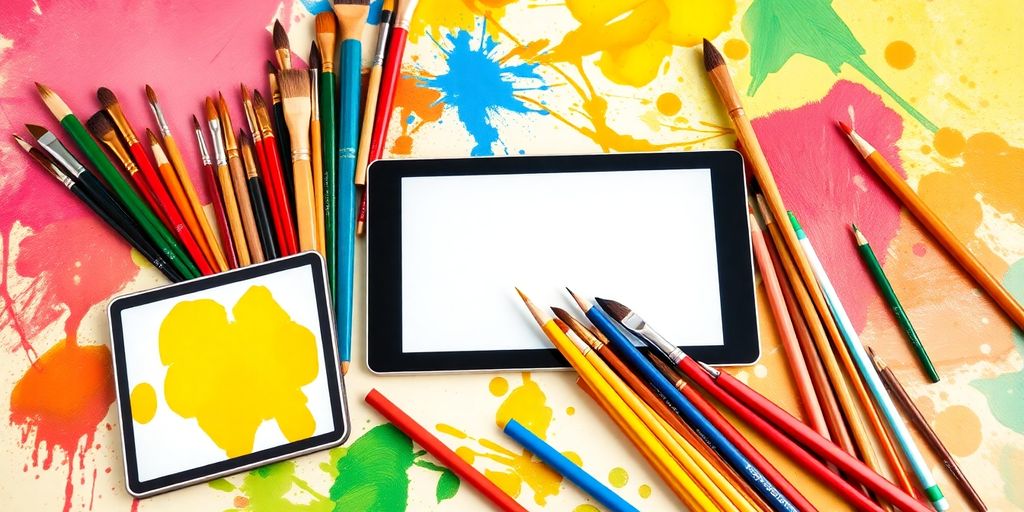
Digital Painting Techniques
Digital painting has really changed how artists work. It's not just about using a stylus instead of a brush; it's a whole new way of thinking about art. You can undo mistakes, experiment with colors easily, and share your work instantly. I remember when I first tried digital painting – the possibilities seemed endless! It's cool to see how artists blend these new tools with classic painting skills. It's like the best of both worlds.
- Experimenting with different brushes and textures.
- Using layers to build up the painting gradually.
- Taking advantage of the undo function to try new things.
Augmented Reality in Museums
AR in museums is a game-changer. Imagine walking through a museum and pointing your phone at a painting, and suddenly, it comes to life! You can see the artist's process, learn about the history behind the piece, or even see a 3D model of an artifact. It makes the whole experience way more engaging and interactive. It's not just about looking at old stuff anymore; it's about experiencing it. I think this is a great way to get more people interested in art and history.
AR can help museums reach new audiences and make their collections more accessible. It's a way to bring the past into the present and make it relevant to today's world.
Preserving Heritage Through Technology
Technology is playing a big role in keeping our heritage alive. Think about old photos and documents that are fading away. With digital scanning and restoration, we can preserve them for future generations. Also, 3D modeling is used to recreate historical sites that no longer exist. It's like bringing history back to life. It's not just about saving old stuff; it's about keeping our stories alive.
- Digitizing historical documents and photographs.
- Creating 3D models of historical sites.
- Using virtual reality to experience historical events.
Creating Inclusive Spaces for Innovation
It's easy to talk about innovation, but true innovation comes from making sure everyone has a seat at the table. It's about building environments where diverse perspectives are not just tolerated, but actively sought out and valued. This isn't just a nice thing to do; it's a strategic imperative. When you limit the voices in the room, you limit the potential for groundbreaking ideas.
Accessibility in Tech Design
Tech design needs to be accessible to everyone, regardless of their abilities. This means thinking beyond the typical user and considering those with disabilities. It's not just about compliance with accessibility guidelines; it's about creating products and services that are genuinely usable and enjoyable for all. Here are some key considerations:
- Universal Design Principles: Applying these principles from the start ensures that products are inherently accessible.
- Assistive Technologies: Understanding how people use assistive technologies like screen readers and voice recognition software is crucial.
- User Testing: Involving people with disabilities in the testing process provides invaluable feedback.
Diverse Voices in Tech Development
A homogenous team is likely to produce homogenous ideas. To truly innovate, we need to actively seek out and amplify diverse voices in tech development. This includes people of different races, ethnicities, genders, sexual orientations, socioeconomic backgrounds, and levels of physical ability. Here's how we can make it happen:
- Inclusive Hiring Practices: Implement strategies to attract and retain a diverse workforce.
- Mentorship Programs: Provide support and guidance to underrepresented groups in tech.
- Creating Safe Spaces: Valuing diverse contributions is key. Establish environments where everyone feels comfortable sharing their ideas and perspectives without fear of judgment or discrimination.
Community-Driven Innovation
Innovation shouldn't happen in a vacuum. Engaging with the community can lead to solutions that are more relevant and impactful. Community-driven innovation involves:
- Open Source Projects: Encouraging collaboration and contributions from a wider community of developers.
- Hackathons and Workshops: Providing opportunities for people to come together and brainstorm new ideas.
- Feedback Mechanisms: Establishing channels for community members to provide feedback on existing products and services.
Creating inclusive spaces for innovation isn't just about being fair; it's about unlocking the full potential of human creativity. By embracing diversity and fostering collaboration, we can build a future where technology benefits everyone.
The Future of Creativity in a Tech-Driven World
Emerging Technologies and Their Potential
It's wild to think about where tech will take creativity next. We're already seeing AI tools that can generate art and music, but what happens when these tools become even more sophisticated? The possibilities are pretty much endless. Imagine personalized learning experiences tailored to individual creative strengths, or virtual environments where artists can collaborate in real-time, regardless of their physical location. The impact of technology on creativity is only going to grow.
Sustainability in Creative Industries
Tech can also help make creative industries more sustainable. Think about it:
- Digital distribution reduces the need for physical products.
- Cloud-based collaboration cuts down on travel.
- AI can optimize resource use in manufacturing creative tools.
We need to consider the environmental impact of all this tech. From the energy consumption of data centers to the materials used in our devices, it's important to find ways to minimize our footprint. intellectual property protections can help incentivize sustainable practices.
The Role of Technology in Shaping Trends
Technology doesn't just enable creativity; it also shapes what's considered trendy. Social media platforms, for example, can catapult niche art forms into the mainstream overnight. Technology and modern innovation trends are intertwined. The speed at which trends evolve is only going to increase, and how technology stimulates creativity will be a key factor in determining who stays ahead of the curve.
Wrapping It Up
In the end, tech really does light the fire for creativity and innovation. It gives us tools to think outside the box and come up with fresh ideas. Whether it's through collaboration, trying out new things, or just having the right space to brainstorm, technology plays a big role. As we keep moving forward, embracing these tools can help us not just keep up but also lead the way in creating new solutions. So, let’s keep pushing the boundaries and see where our creativity can take us next.
Frequently Asked Questions
What are some digital tools that can help with creativity?
There are many digital tools like graphic design software, music production apps, and video editing programs that can help you express your creativity.
How does social media impact artists?
Social media allows artists to share their work with a larger audience, connect with fans, and receive feedback, which can inspire new ideas.
Can virtual reality be used for art?
Yes! Virtual reality can create immersive art experiences where users can interact with 3D environments and create art in a whole new way.
What is the importance of teamwork in innovation?
Teamwork brings together different skills and ideas, which can lead to better solutions and creative breakthroughs.
How is AI changing the way we create?
AI tools can help artists and creators by suggesting ideas, automating tasks, and even generating content, making the creative process faster.
How can technology help young people be more creative?
Technology offers fun ways to learn, like coding games and interactive apps, which can inspire young people to think creatively and solve problems.
Posting Komentar untuk "Tech Sparks: Fueling Creativity and Innovation"