Is an AI-Powered Economy on the Horizon?
As artificial intelligence (AI) continues to evolve, many are asking whether we are on the brink of a major shift toward an AI-driven economy. The potential benefits of integrating AI into various sectors are significant, but the path to achieving this future is filled with uncertainties. From economic impacts to labor market changes, there are multiple factors to consider as we explore the question: Will the World Transition to an AI-Based Economy?
Key Takeaways
- AI could boost local economies' GDP by up to 26% by 2030.
- Investment in AI technology is expected to grow, but not at the pace some anticipate.
- Job markets may see both new opportunities and significant displacement due to AI.
- Consumer preferences are shifting, with AI enhancing product personalization and demand.
- Global leaders in AI implementation are likely to reap the most economic rewards.
Economic Impact of AI Integration

Projected GDP Growth from AI
Okay, so everyone's talking about AI, but what does it really mean for the economy? Well, a lot of experts are saying it could seriously boost GDP. We're talking about AI not just doing the same old things faster, but actually creating new ways to make money. Think of it as adding a whole new engine to the economic machine. It's not just about robots taking over factories (though that's part of it), but also about AI helping us come up with better products, services, and business models.
- Increased productivity across sectors
- New business models and revenue streams
- Greater efficiency in resource allocation
Sector-Specific Economic Benefits
Some sectors are going to see bigger changes than others. Healthcare, for example, could get a huge boost from AI helping with diagnosis and treatment. Manufacturing could become way more efficient with AI-powered robots and supply chain management. And don't even get me started on finance – AI could revolutionize everything from fraud detection to investment strategies. The impact of artificial intelligence on jobs will be felt differently depending on the industry. It's not a one-size-fits-all kind of thing.
- Healthcare: Improved diagnostics and personalized medicine
- Manufacturing: Automation and optimized supply chains
- Finance: Fraud detection and algorithmic trading
Long-Term Economic Predictions
Okay, so what happens way down the line? That's the million-dollar question, right? Some people are super optimistic, predicting a golden age of prosperity thanks to technology's role in economic growth. Others are more cautious, worried about things like job displacement and inequality. The truth is, nobody really knows for sure. But most experts agree that AI is going to be a major force shaping the economy for decades to come. It's going to be a wild ride, that's for sure. The key is to prepare for the AI-driven economic changes now.
It's important to remember that these are just predictions. The actual impact of AI on the economy will depend on a lot of factors, including how quickly the technology develops, how well we adapt to it, and what kinds of policies we put in place. It's up to us to shape the future, not just sit back and watch it happen.
- Potential for increased productivity and wealth creation
- Risks of job displacement and economic inequality
- Need for proactive policies to manage the transition
Investment Trends in AI Technology
Current Investment Levels
Okay, so where's the money going right now? Well, last year, the US alone saw an estimated $67 billion pumped into AI. That's a lot of zeros! But, to put it in perspective, some analysts think that to really see an AI-driven economic boom, we'd need way more. Still, $67 billion is nothing to sneeze at. It shows people are serious about this stuff. A lot of this investment is going into things like machine learning models, AI chips, and the infrastructure needed to support all of it. It's not just about the flashy AI applications you see in the news; it's about building the foundation.
Future Investment Projections
So, what's next? Predicting the future is always tricky, but most experts agree that AI investment is only going to go up. Some project growth rates anywhere from 13% to 34% annually. If that holds true, we could be looking at spending in the $76 billion to $121 billion range this year and next. Some even think it could nearly double, mirroring the growth of companies like NVIDIA. Of course, there's always a chance things could slow down, but the general consensus is that AI is a hot ticket right now. The cloud services market is booming, and that's only going to fuel the fire.
Challenges in AI Funding
It's not all sunshine and rainbows, though. There are definitely some hurdles when it comes to funding AI. For one, it's a pretty complex field, and investors need to really understand what they're getting into. That can be a barrier for some. Also, a lot of AI projects are still in the early stages, and it can be hard to predict which ones will actually pay off. That makes it a riskier investment than, say, putting money into a well-established company. Plus, there's always the risk of overvaluation, where companies get hyped up and their stock prices skyrocket, only to come crashing down later. It's important to be smart about where you put your money.
It's important to remember that AI is still a relatively new field, and there's a lot of uncertainty about its future. While the potential rewards are huge, so are the risks. Investors need to do their homework and be prepared for the possibility of setbacks.
Labor Market Transformations
Job Creation vs. Job Displacement
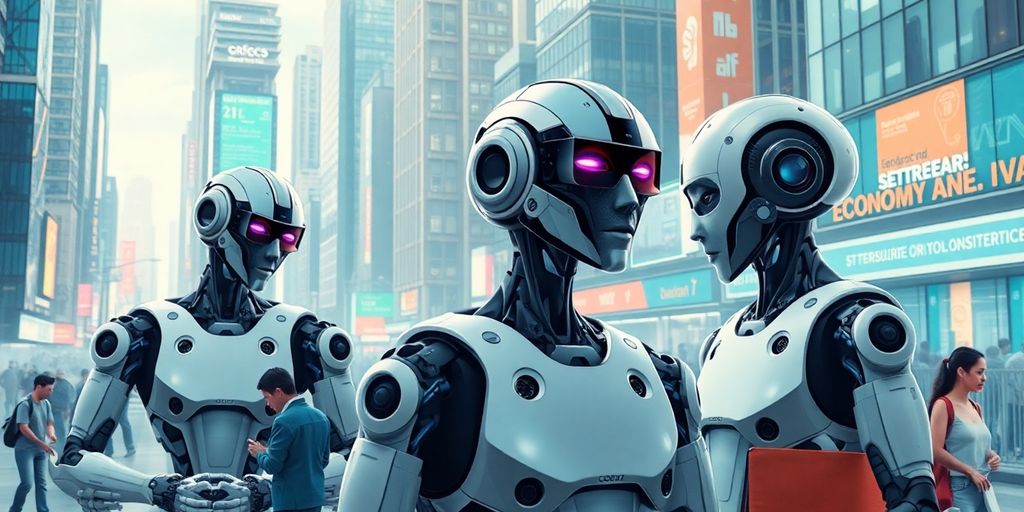
Okay, so everyone's worried about robots taking all the jobs. And yeah, automation is definitely changing things. But it's not just about robots replacing people. It's more like jobs are changing. Some jobs will disappear, sure, but new ones will pop up too. It's a whole workforce transition thing.
- New jobs in AI development and maintenance. Someone's gotta build and fix those robots, right?
- More demand for roles that require uniquely human skills, like creativity and complex problem-solving.
- A shift towards jobs that involve managing and working alongside AI systems.
The big question is whether the new jobs will be enough to offset the ones lost. And whether people will have the skills to do those new jobs. That's where things get tricky.
Skills Required for an AI Economy
So, what skills do you need to survive in an AI-powered world? It's not just about coding. It's about being adaptable and learning new things constantly. You need to be able to think critically, solve problems, and work with other people. Technical skills are important, but so are soft skills.
- Data analysis and interpretation.
- Critical thinking and problem-solving.
- Communication and collaboration skills.
Impact on Workforce Dynamics
AI is going to shake up how we work. Think about it: more remote work, more flexible schedules, and a bigger emphasis on lifelong learning. The traditional 9-to-5 might become a thing of the past. And companies will need to figure out how to manage a workforce that's constantly changing and adapting. It's a brave new world, and we're all just trying to figure it out. It's not just about [automation and workforce transition], it's about how we organize work itself.
Consumer Behavior and AI
Personalization of Products
AI is changing how companies make and sell stuff. Instead of making one-size-fits-all products, businesses can now use AI to figure out what each customer really wants. This means more customized products, which can make people happier and more likely to buy. Think about getting recommendations that are actually good, or clothes that fit perfectly because they're designed just for you. It's pretty cool, but also a little weird when you think about how much data is being used.
- AI analyzes past purchases.
- It looks at browsing history.
- It even checks social media activity.
Changes in Consumer Demand
AI isn't just changing what we buy; it's changing how we buy. People are starting to expect more from their shopping experiences. They want things to be easy, fast, and tailored to them. This means companies need to step up their game if they want to keep customers happy. If a business isn't using AI to make things better for customers, they might get left behind. According to a joint study, AI will influence a large percentage of consumer transactions in the US by 2030.
It's like everyone suddenly expects a personal shopper, even when they're just browsing online. If a website is slow or doesn't understand what I'm looking for, I'm out. There are too many other options that get it right.
AI's Role in Enhancing Customer Experience
AI can make shopping way better. Chatbots can answer questions instantly, AI can help AI business model find the right products, and deliveries can be faster and more reliable. But it's not just about convenience. AI can also make things more fun and engaging. Think about interactive ads or virtual try-on tools. The goal is to make shopping less of a chore and more of an experience.
- Faster customer service.
- More relevant product suggestions.
- Smarter delivery systems.
Global Perspectives on AI Adoption
Leading Countries in AI Implementation
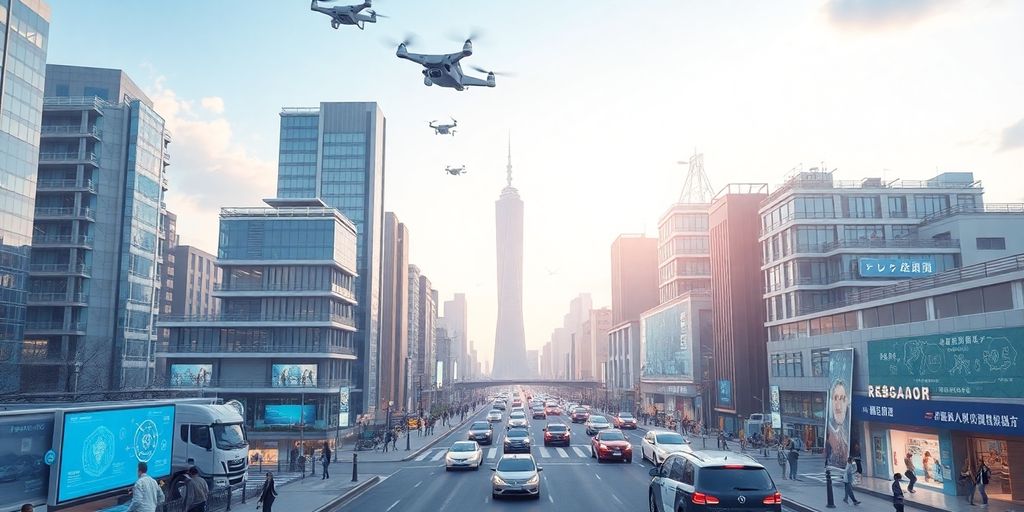
Okay, so when we talk about AI, it's not like everyone's on the same page. Some countries are really pushing ahead, while others are taking a more cautious approach. You've got places like the US and China, obviously, but also smaller nations like Israel and Singapore that are making big moves. It's interesting to see how different governments are prioritizing AI in their national strategies. It's a race, but everyone's running at their own pace.
- Government investment in AI research
- Number of AI startups
- Availability of skilled AI professionals
Comparative Economic Gains
It's not just about who's using AI, but who's actually benefiting the most economically. Some studies suggest that countries with strong manufacturing sectors could see the biggest gains, while others point to the service industry as the main beneficiary. It really depends on how well each country can integrate AI into its existing economic structure. The adoption of AI technologies is expected to lead to job transformation rather than mere displacement.
The economic impact of AI varies significantly across the globe. Factors such as existing infrastructure, workforce skills, and regulatory environments play a crucial role in determining the extent of these gains.
Cultural Attitudes Towards AI
This is where things get really interesting. How people feel about AI can have a huge impact on how quickly it's adopted. In some cultures, there's a lot of excitement about the potential benefits of AI, while in others, there's more skepticism and concern about job losses or ethical issues. These attitudes can shape government policies and influence public opinion, ultimately affecting the pace of AI adoption. It's not just about the technology itself, but also about how people perceive it. Make sure you have the right talent and culture, as well as technology.
- Public trust in AI systems
- Media portrayal of AI
- Education and awareness campaigns
Risks and Challenges of an AI Economy

Economic Disparities
AI could make the rich richer and the poor poorer. It's not a given, but it's a real possibility. If AI primarily benefits those who already have capital and skills, it could widen the gap between the haves and have-nots. Think about it:
- Job displacement in low-skill sectors could leave many without work.
- Increased productivity might not translate into higher wages for everyone.
- Access to AI-driven services and opportunities could be unevenly distributed.
We need to think about how to make sure the benefits of AI are shared more broadly, not just concentrated at the top.
Regulatory and Ethical Concerns
Who's in charge when an AI makes a mistake? What happens when algorithms perpetuate bias? These are tough questions we need to answer.
- Data privacy is a big one. How do we protect personal information in an AI-driven world?
- Algorithmic bias is another. How do we make sure AI systems are fair and don't discriminate?
- Job displacement is a concern. What's the plan for workers who lose their jobs to automation?
It's a bit of a wild west out there right now, and we need some rules of the road. Ethical guidelines are important, but we also need actual regulations to make sure AI is used responsibly.
Potential for Overvaluation in Markets
Remember the dot-com bubble? There's a risk of something similar happening with AI. Everyone's so excited about the potential that they might be overestimating its near-term impact.
- Investors could pour money into AI companies without a clear understanding of their business models.
- Stock prices could become detached from reality, leading to a market correction.
- The hype around AI could distract from other important economic factors.
It's easy to get caught up in the excitement, but it's important to stay grounded. A healthy dose of skepticism is always a good thing, especially when it comes to new technologies.
Future Scenarios for AI and the Economy
Optimistic Projections
Okay, so picture this: AI really takes off. We're talking about a world where AI boosts productivity so much that the economy grows way faster than expected. Some experts think AI could add a significant percentage to the GDP by 2030. It's like everyone suddenly got a super-smart assistant that makes them way more efficient. This could mean more money for everyone, better products, and maybe even shorter workweeks.
- Increased productivity across industries
- Higher overall economic growth rates
- Improved living standards globally
Pessimistic Outcomes
But what if things don't go so well? Imagine a scenario where AI mostly benefits the already wealthy, making inequality even worse. Maybe the future of work with AI isn't so bright, with lots of people losing their jobs and not enough new ones being created. It's a bit scary to think about, but it's important to consider the downsides too.
If AI's benefits are not distributed fairly, we could see significant social and economic problems. This includes increased unemployment, widening income gaps, and potential social unrest. It's crucial to address these risks proactively.
- Increased job displacement and unemployment
- Widening income inequality
- Potential for social unrest
Balanced Perspectives on AI Growth
Realistically, the future is probably somewhere in the middle. AI will likely bring some good and some bad. The key is to figure out how to manage the transition so that more people benefit than get hurt. This means investing in education, creating new job opportunities, and maybe even rethinking how we distribute wealth. It's not going to be easy, but it's definitely possible to create a future where AI helps everyone, not just a few.
- Focus on education and retraining programs
- Develop policies to address job displacement
- Promote ethical AI development and deployment
Looking Ahead: The Future of AI in Our Economy
So, what’s the bottom line? We’re standing on the edge of something big with AI, but it’s not all sunshine and rainbows just yet. Sure, there’s a lot of excitement about how AI could boost productivity and even GDP by a good chunk in the coming years. But let’s be real—there’s a chance we might not see those huge gains right away. It’s going to take time for businesses to figure out how to use AI effectively and for the tech to really pay off. Plus, there are risks involved, like the possibility of underwhelming results that could keep growth in check. So, while the potential is there, it’s wise to keep our expectations in check and remember that the road to an AI-powered economy might be a bit bumpy.
Frequently Asked Questions
What is an AI-powered economy?
An AI-powered economy is one where artificial intelligence is widely used in various industries to improve efficiency, increase productivity, and boost economic growth.
How will AI impact jobs?
AI could create new jobs while also replacing some existing ones. Many jobs will change, requiring new skills, but overall, there may be more opportunities in tech and AI-related fields.
What are the benefits of AI for businesses?
Businesses can benefit from AI through improved productivity, better decision-making, and enhanced customer experiences, which can lead to higher profits.
Will AI make products cheaper?
Yes, AI can help reduce production costs by streamlining processes and increasing efficiency, which may lead to lower prices for consumers.
Which countries are leading in AI adoption?
Countries like the United States and China are at the forefront of AI adoption, investing heavily in technology and research to harness its potential.
What are the risks of an AI-driven economy?
Some risks include economic inequality, job displacement, and ethical concerns about data privacy and decision-making in AI systems.
Posting Komentar untuk "Is an AI-Powered Economy on the Horizon?"